STANLEY’S LETTER
The National School System
and Inspectors in Ireland,
1831 – 1922
PATRICK F O’DONOVAN
My Lord,
His Majesty’s Government having come to the determination of empowering the Lord Lieutenant to constitute a Board for the Superintendence of a system of National Education in Ireland, and Parliament having so far sanctioned the arrangement, as to appropriate a sum of money in the present year, as an experiment of the probable success of the proposed system …
Thus Edward Stanley began his letter to the Duke of Leinster in October 1831. Writing from the Irish Office in London, the Chief Secretary for Ireland set out the key principles governing a new plan for education in Britain’s oldest colony. Within weeks, the Commissioners of National Education in Ireland had commenced to construct the national school system which, in time, would prove to be the most successful government initiative for education in Ireland in the nineteenth century. Overseen by Dublin Castle and the Treasury, Ireland’s national school system was an early example of state support for a universal elementary school system while the appointment of inspectors was also an innovation.
The initiative was tailored to meet the particular circumstances of Ireland and, significantly, pre-dated similar developments in Britain. Stanley’s letter bestowed an important and momentous launch for education in Ireland forming the first state system of elementary education in the English-speaking world. Conspicuous by their absence however, the indigenous culture and language of Ireland were officially excluded from the national schools for a long period.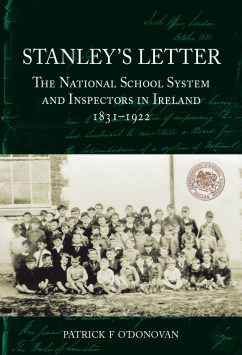
Within a few decades, the national schools dotted the landscape and became familiar local institutions across the whole island of Ireland. The national school system has been a continuous and enduring element in Irish life since its establishment. It has had profound effects and has played an extraordinary role in the development of Irish society. Attendance at a national school has loomed largest as the school experience availed of by the vast majority of the children and young people of Ireland. The national schools provided elementary schooling for most Irish men and women, conferring remarkable and long-lasting advantages on the country.
Few, if any, British politicians of the nineteenth century could point to a legacy as important or valuable as all that derived from Stanley’s letter of 1831.
Author: Patrick F O’Donovan qualified as a national teacher in St Patrick’s College of Education, Dublin, and later served as an inspector of schools. He has wide experience of the national school system and close familiarity with original archive material. He collaborated with Professor John Coolahan in writing A History of Ireland’s School Inspectorate, 1831 – 2008 (Dublin: Four Courts Press, 2009).
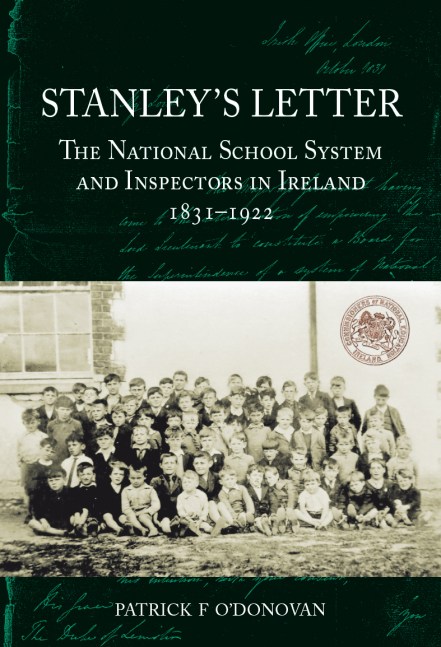
Front cover: Coolard Boys’ National School (1937) and Seal of the Commissioners
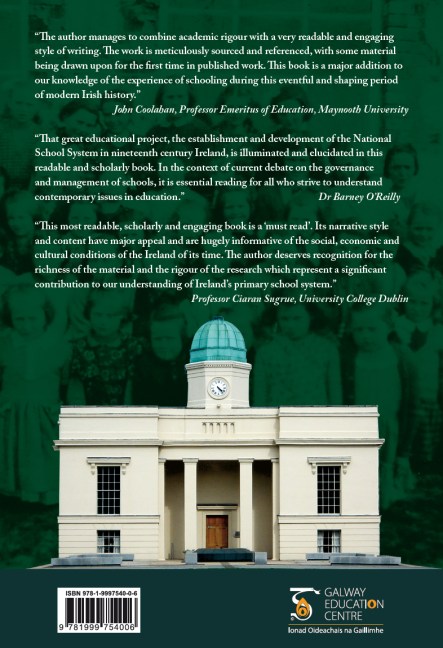
Back cover: Central Model School (Infant Department), Marlborough Street, Dublin
Images of the Central Model School, the Seal of the Commissioners, and Sir Patrick Keenan reproduced by courtesy of the Department of Education and Skills. Images of schoolchildren courtesy of Maurice O’Mahony, author of A History of Coolard National School 1846 – 2016 (2016)
Stanley’s Letter is focused on Ireland’s national school system. The inspection system of the Commissioners of National Education in Ireland is the prism to analyse and describe how the system was so influential and so successful relatively in the 19th and 20th centuries. The book provides a considerable amount of new information about many aspects of the national school system including material on its foundation, the Great Famine, links with workhouse schools, published reportage of inspectors, denominational factors, curricular features, dysfunctional aspects including governance, the development of the profession of teaching, the position of the Irish language, and attempts to introduce structural reform in the post-1900 years. The book sheds light on many key elements of Ireland’s educational development and explains how primary education commenced under native government both north and south. The book is published in association with Galway Education Centre, is in hardback, and has a Foreword by John Coolahan, Professor Emeritus of Education, Maynooth University.
The book will be launched in Dublin, at the CLOCK TOWER, MARLBOROUGH STREET, on Wednesday, 6 September, at 5.30 p.m.
The book will go on sale online on 1 September 2017.
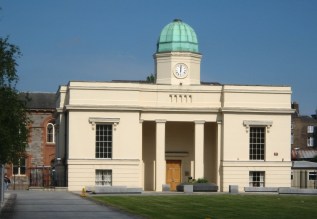
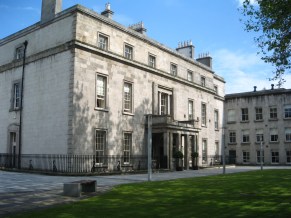
Above: The Central Model Schools visited by Queen Victoria in August 1849. Close to two thousand children were on rolls in the model schools in the Marlborough Street grounds of the Commissioners in later years. Tyrone House, built around 1740, was purchased in 1834 along with four acres as the headquarters for the national school system and so it has remained to the present day. Dublin Castle and the Treasury were in charge of the national school system and oversaw its governance in Ireland. Approximately 17 million children and young people have passed through the national school system since its foundation.
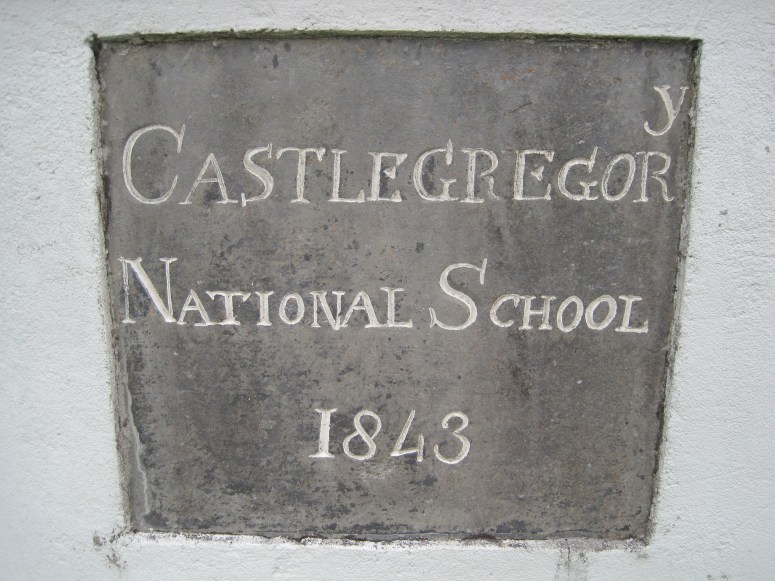
“The inscription ‘National School’ is to be put up conspicuously on the outside of the school-house …”
Commissioners of National Education in Ireland
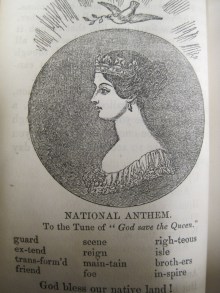
An image of Queen Victoria was printed in the Sequel to the Second Book of Lessons for the use of schools (1847) with the national anthem to be learned by children in national schools. Irish language and culture were officially excluded from the national school system for a very long period.
The Commissioners’ lesson books were developed in Dublin and proved to be bestsellers in Britain and throughout the British empire.
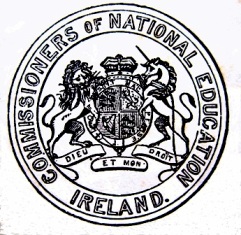
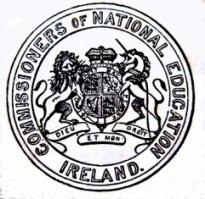
After Victoria granted a royal charter in 1845, the Commissioners of National Education designed their official seal. This featured a variant of the royal coat of arms, with lion and unicorn framing a shield with quadrants, one of which represented the ancient kingdom of Ireland with a harp. The seal was imprinted on the Commissioners’ lesson books.
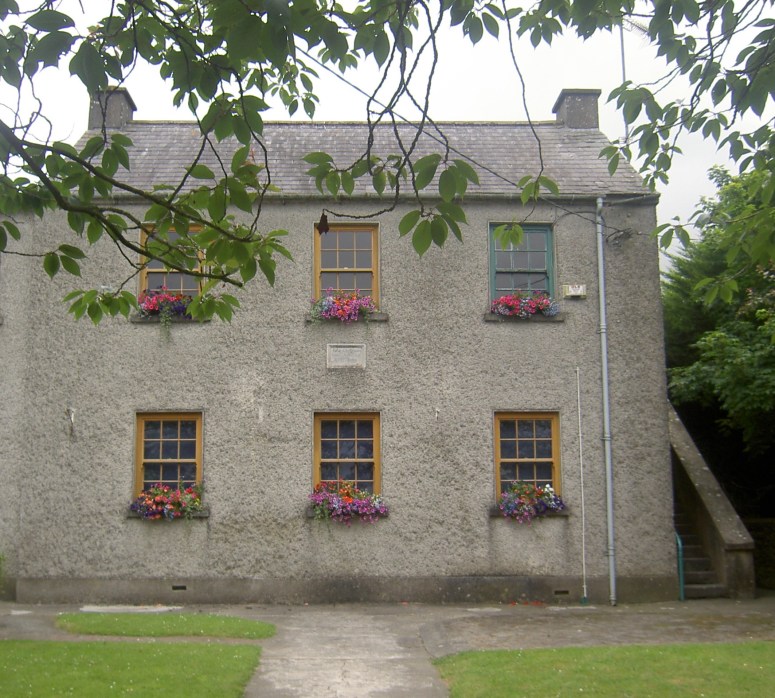
Edgeworthstown National School 1840. Note external stairs giving access to the upper school room. A frequent design in the early years of the national school system was to have the boys’ school on the ground floor and the girls’ school on the upper floor. Commonly, two separate schools with separate roll numbers were operated.

A Connemara school room pictured about 1900 by the American Clifton Johnson. Note the small blackboard with attendance marked up, the school clock, and the pasteboard tablet showing that Secular Instruction was in progress. Note the teacher’s desk with the press to hold school rolls and registers. This was among the more evocative photographs taken of a rural national school in Ireland in the Victorian era.
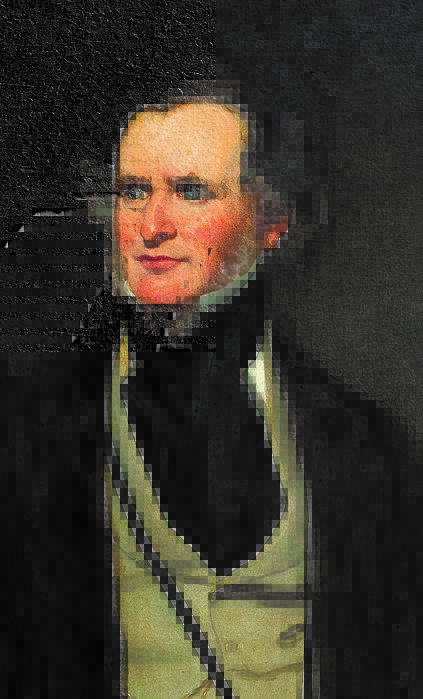
In October 1831, Edward Stanley as Chief Secretary for Ireland addressed a letter to the Duke of Leinster setting out the details of a plan for education in Ireland. Within a short time, the national school system commenced operations from its first headquarters in Merrion Street in Dublin.
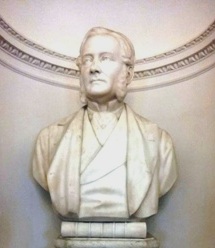
Sir Patrick J Keenan, Resident Commissioner from 1871 to 1894, was among the most influential commissioners in the later years of the nineteenth century. While he effected many improvements to the national school system, his undeviating attachment to payment by results had detrimental effects on the development of the national schools.
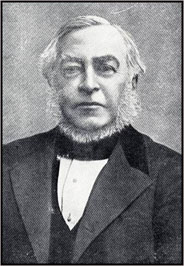
Vere Foster was by far the greatest philanthropist in the national school system. His brilliant munificence towards the poorest children in Ireland in the Victorian era shines luminously against a bleak and dreary backdrop of frugal educational provision.
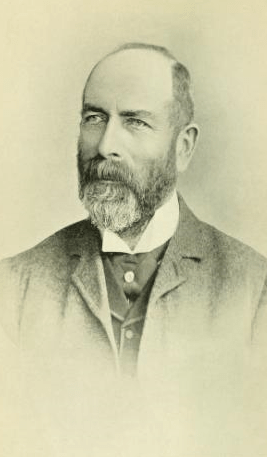
Patrick Weston Joyce from Limerick, one of 15 organisers appointed in 1856, published his celebrated Handbook of School Management and Methods of Teaching in 1863. This was a key guide to school-keeping for decades in the national school system. Later headmaster in the Central Model School in Marlborough Street, Joyce became a professor in the Board’s training establishment and was a well-known writer and folklorist in his time. Joyce’s A Child’s History of Ireland was an important source for the study of Irish history in the national schools in the early years of the twentieth century.


National schools from the mid-Victorian period. While many of the schools were slated stone buildings with solid wall enclosures, facilities were frugal and maintenance was frequently neglected.
Public provision of local funding, and civic interest in primary education, were not features of the national school system.
Model schools were built in centres around Ireland from 1849 to 1867 at considerable cost.

Above Limerick District Model (1855)[£4,473]
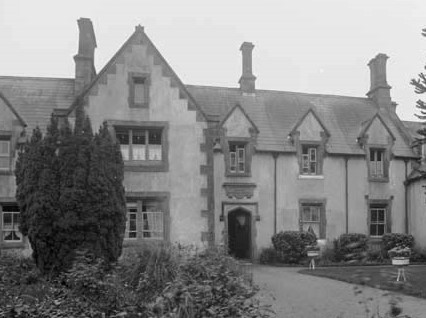
Dunmanway District Model (1849)[£5,292]
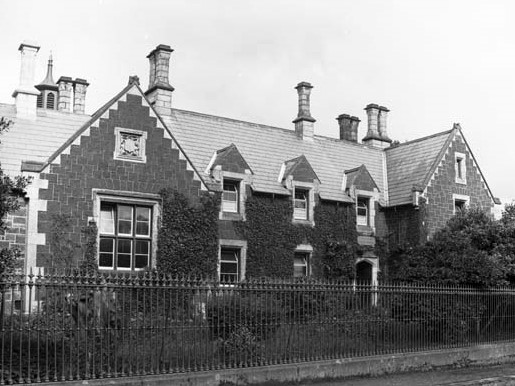
Ballymena District Model (1849) [£4,747]. Of 26 models built, 14 were located in Ulster.
The model schools were severely criticised by the Powis Commission Report but little was done to improve their operation in subsequent years.

St Patrick’s College, Drumcondra, Dublin, was one of the first denominational training colleges recognised for male teachers in 1883.
STANLEY’S LETTER
The National School System and Inspectors in Ireland, 1831 – 1922
Patrick F O’Donovan [Galway Education Centre, 2017]
Baineann an leabhar Stanley’s Letter le stair na scoileanna náisiúnta ó bhunú an chórais sa bhliain 1831 go 1922 nuair a tháinig rialtas nua i réim sa tír. Shíolraigh an córas scoileanna náisiúnta as litir a scríobh Edward Stanley, Ard Rúnaí, Rialtas na Breataine, i mí Dheireadh Fómhair 1831. Soláthraíonn an leabhar an-chuid eolais faoi bhunú an chórais, Coimisinéirí an Oideachais Náisiúnta agus a gceanncheathrú Oifig an Oideachais i Sráid Maoilbhríde, Baile Átha Cliath, ceapacháin na gcigirí agus na treoracha a tugadh dóibh i dtús, rialacha an chórais, na rialacha praiticiúla do mhúinteoirí, an Gorta Mór, na scoileanna i dTithe na mBocht, tuairiscí foilsithe na gcigirí, cúrsaí creidimh sna scoileanna, an curaclam ‘3R‘ le léitheoireacht, scríobh agus áireamh, laigí sa chóras, dul chun cinn i bproifisiún na múinteoireachta, an faillí maidir le múineadh na Gaeilge mar theanga inti féin nó mar mheán teagaisc, curaclam nua 1900, agus iarrachtaí athchóiriú a dhéanamh ar struchtúr an oideachais ó 1900 ar aghaidh. Tugann an leabhar léargas leathan ar réimsí tábhachtacha den oideachas in Éirinn agus na mórathraithe a tharla thart ar 1922 sa tuaisceart agus sa deisceart. Beidh an leabhar seo mar ábhar spéise d’éinne le suim i stair an oideachais in Éirinn maraon le múinteoirí, micléinn agus daoine ag déanamh taighde ar scolaíocht ina gceantair féin.
 Stanley's Letter